Regular Periods Do Not Always Mean Hormonal Balance
This article is part of the Women’s Hormonal Health Education Series aimed at improving awareness on hormonal health, menstrual health, and fertility among women.
Many women believe that as long as their period comes every month, their hormones are normal and their reproductive health is fine. While a regular menstrual cycle is often a good sign, it does not always mean ovulation is occurring or that hormones are balanced.
This is an important topic not only for women trying to conceive, but for all women, because hormones affect energy levels, mood, metabolism, skin, hair, and overall health.
Understanding the Menstrual Cycle
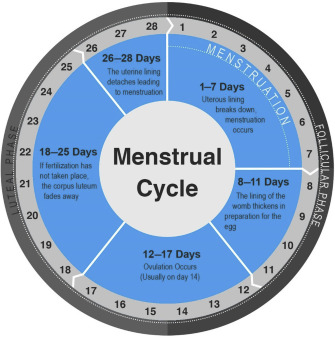
The average menstrual cycle lasts 28 days, but anything between 21–35 days is considered normal. The cycle is divided into three main phases:
- Follicular phase – the ovary prepares an egg. Menstruation lasts for the first 3-7 days of this phase
- Ovulation – the egg is released
- Luteal phase – the uterus prepares for possible pregnancy
These phases are controlled by several hormones. If these hormones are not balanced, ovulation may not occur or implantation may not be successful, even if menstruation happens regularly.
Regular Periods Do Not Always Mean Ovulation
Menstruation is simply the shedding of the lining of the uterus, and it is not absolute proof that ovulation occurred.
Research has shown that some women who appear to have regular cycles may still have anovulatory cycles (cycles where no egg is released). This means a woman may see her period every month but may not actually be ovulating consistently (PMC 2015).
Hormones Involved in Female Reproductive Health
Several hormones work together to regulate the menstrual cycle and fertility.
1. Follicle Stimulating Hormone (FSH)
FSH stimulates the ovarian follicles to mature eggs.
- High levels may indicate poor ovarian reserve or ovarian failure.
- Low levels may indicate pituitary or hypothalamic problems.
2. Luteinizing Hormone (LH)
LH triggers ovulation.
- High LH levels may be seen in Polycystic Ovary Syndrome (PCOS).
- Low LH may result in failure to ovulate.
3. Estrogen (Estradiol)
Estrogen helps build the uterine lining and also affects mood, energy levels, and metabolism.
- High levels may be seen in PCOS, fibroids, or ovarian cysts.
- Low levels may occur in ovarian failure or menopause.
4. Progesterone
Progesterone confirms that ovulation has occurred and prepares the uterus for implantation.
- Low progesterone may indicate anovulation or luteal phase defect.
5. Prolactin
Prolactin is responsible for milk production after childbirth, but high prolactin can stop ovulation and cause infertility even if periods appear normal.
6. Thyroid Stimulating Hormone (TSH)
Thyroid hormones affect metabolism, energy levels, and menstrual cycles.
- High TSH (hypothyroidism) may cause heavy periods, weight gain, and fatigue.
- Low TSH (hyperthyroidism) may cause light or absent periods and anxiety.
Infertility Is Possible Even With Regular Periods
Some conditions that may cause infertility despite regular menstruation include:
- Polycystic Ovary Syndrome (PCOS) – Yes! Around 15–25% of individuals with PCOS experience regular menstrual cycles
- Luteal phase defect
- High prolactin levels
- Thyroid disorders
- Poor ovarian reserve
In many cases, bleeding remains regular, so the problem may not be discovered until a woman tries to conceive or undergoes hormonal testing.
Signs That May Suggest Hormonal Imbalance
Hormonal imbalance does not only affect fertility. It can also affect daily life and overall health.
It can only be diagnosed with a Hormonal Profile Test, but possible signs include:
- Persistent fatigue
- Mood swings or anxiety
- Unexpected weight gain or difficulty losing weight
- Acne or skin changes
- Hair thinning or excessive hair growth
- Heavy or painful periods
- Very light periods
- Difficulty getting pregnant
Hormonal Profile Test
A hormonal profile test is a blood test used to measure reproductive hormones and evaluate ovarian function, ovulation, thyroid function, and possible causes of infertility.
Typical Timing for Hormone Tests
| Hormone | When to Test |
|---|---|
| FSH, LH, Estrogen | Day 2–5 of cycle |
| Progesterone | Day 21 (mid-luteal phase) |
| Prolactin | Any day (fasting preferred) |
| TSH | Any day |
Conclusion
A regular menstrual cycle is a good sign, but it does not always guarantee ovulation, hormonal balance, or fertility. Hormones influence many aspects of a woman’s health, including energy, mood, metabolism, and reproductive health.
Women are encouraged to pay attention to other symptoms, seek medical advice when necessary, and consider hormonal evaluation if there are concerns about fertility, menstrual health, or hormonal symptoms. The menstrual cycle is not the complete picture of your hormonal health.