
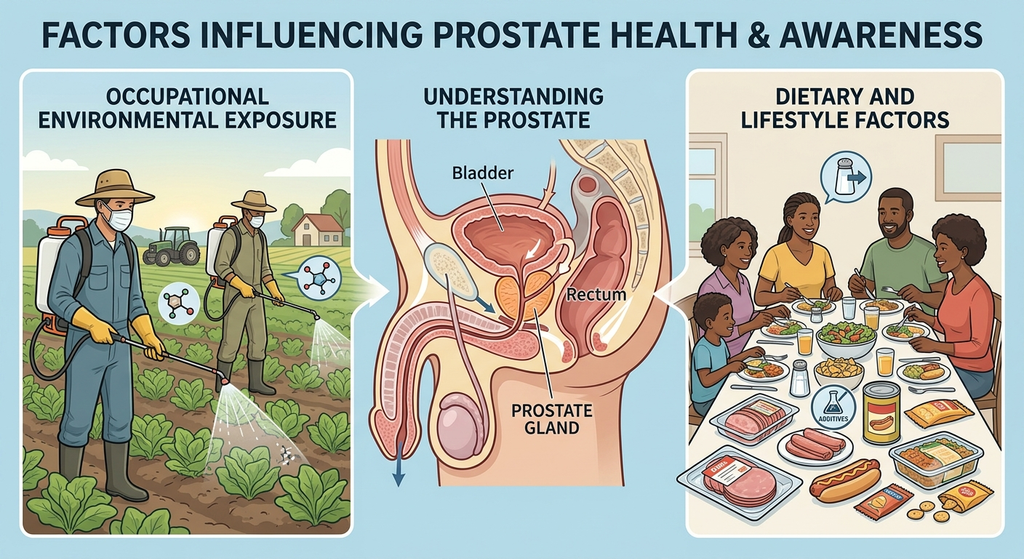
Every time a man is diagnosed with prostate cancer, he is usually handed one explanation before any other: genetics. While inherited risk is undoubtedly a major factor, focusing solely on DNA ignores the heavy, growing toll of our modern surroundings. To understand the full picture, we must examine both sides of the coin.
Side 1: The Reality of Genetics
The genetic link to prostate cancer is real, documented, and undisputed. Age remains the strongest known factor, with risk climbing sharply after 50. Having a father or brother with prostate cancer more than doubles a man’s risk, and specific inherited gene variants elevate that danger further.
This is the side of the coin medicine shows you first—and often, it is the only side you are encouraged to see.
Side 2: The Environmental Impact and the Silent Invasion
Now, turn the coin over. Here is the side that rarely gets airtime: the devastating impact of workplace, lifestyle, and dietary exposures. While we often think of environmental toxins as something “out there” in factory towns or agricultural fields, the reality is that these chemicals are increasingly invading our homes through the very things we rely on for health.
Occupational Hazards
It has long been known that certain jobs carry a higher risk.
Industrial Exposure: Smelting, coke oven operations, and firefighting expose workers to industrial by-products that drive up cancer risk.
Shift Work: Men working chronic night shifts whose bodies are permanently pulled out of rhythm with natural daylight also face higher risks.
The Contaminated Dinner Table: From Farm to Fork The most alarming shift in environmental exposure concerns our food supply chain. Historically, the highest chemical risks were borne by the workers on the front lines.
Pesticides in Farming: Farmworkers and pesticide applicators have a documented, elevated risk. A study tracking over 54,000 licensed applicators tied specific pesticides to aggressive forms of the disease. Men exposed to high doses actually showed measurable changes to the very genes linked to prostate cancer.
However, in the pursuit of convenience, aesthetics, and extended shelf life, a disturbing trend has emerged among some farmers and produce marketers. There is growing evidence of products being preserved with chemical cocktails—including pesticides, fungicides, and preservatives—at levels well above normal or recommended standards just to keep produce looking “fresh” through long transport chains.
This brings the chemical threat directly to the consumer. Men who believe they are making healthy choices by eating fresh produce are, in reality, being exposed to high concentrations of these same agricultural chemicals in the comfort of their own kitchens. Through the consumption of these over-treated products, the environmental toxins once thought only to affect farmworkers are now a daily reality for the general public.
Weighing the Evidence
We have seen this pattern before. For decades, dietary fat was blamed for the heart disease epidemic, until it was revealed that sugar interests had funded research to shift the blame away from themselves. Today, a hyper-focus on genetics might be performing the same function for industrial, food, and agricultural chemical systems, shielding them from accountability for a toxic food supply.
Migration data provides the clearest proof that genetics is not the whole story. When men move from regions with historically low prostate cancer risk (such as rural parts of Asia) to high-risk countries (like the United States), they begin to develop that high risk—often within a single generation. By the very next generation, their children carry the elevated risk of their new home.Genetics do not rewrite themselves in one generation; environments do.
The Data Behind the Environment
A 2017 review of multiple studies found that men with high, sustained pesticide exposure carry a 33% higher risk of prostate cancer than men with little to no exposure. While researchers cannot ethically run a reverse experiment—stripping populations of chemical exposure to watch cancer rates fall—the measured gap between high and low exposure is undeniable.
Genetics has its rightful place in this story, but it is not the only fatal factor. It is a convenience for the industry to let us believe our fate is sealed by our DNA. The next time genetics is presented as the entire explanation, ask to see the other side: look at the job, the water, the air, and—most importantly—the food on your dinner plate.
A coin only tells the truth when you check both sides.